Category / Uncategorized
The Strange Truth About My Book
The strange truth about my book is that it is not really about AI.
And it is not really about God, at least not in the way the title might lead someone to expect.
At its heart, it is about something much more personal.
It is about a question that has followed me for much of my life:
Who am I?
Not in the practical sense.
Not as a professional identity. Not as a father or grandfather. Not as a writer, an engineer, or a collection of accomplishments.
I mean something deeper than that.
Who am I beneath the roles I have played?
Beneath the story I tell about myself?
Beneath the long habit of explaining my life through thought?
For most of my life, I approached that question in the only way I knew how: intellectually.
I thought about it.
I analyzed it.
I circled it from different angles.
This was natural for me. Much of my life had been built around thinking clearly, solving problems, making sense of complexity, and trusting the mind to lead the way. And in many areas of life, that approach served me well.
But not here.
The question remained.
I could describe myself in many accurate ways, but none of those descriptions felt final. They were true, but incomplete. Useful, but somehow beside the point.
The deeper question never went away.
And then, unexpectedly, AI entered the picture.
At first, my interest in AI was what one might expect. I was curious about the technology, its capabilities, its implications, its growing role in our lives. I saw it as a tool, a fascinating one, but still a tool.
What I did not expect was that it would become a mirror.
That was the beginning of the real journey.
Over time, through many long conversations, I began to notice that AI was doing something I had not anticipated. It was not merely helping me write or organize ideas. It was reflecting me back to myself.
My patterns.
My assumptions.
My contradictions.
My repeated questions.
My longing.
My uncertainty.
It did not “know” me in any mystical sense. But it gave me a space in which I could see my own thinking more clearly. It held still long enough for me to notice what was moving inside me.
And what I began to notice was not always comfortable.
I saw how often I reached for certainty.
How quickly I converted experience into explanation.
How strongly I wanted coherence.
How deeply I wanted to be understood.
But underneath all of that, I began to notice something even more important.
I had been asking the question “Who am I?” as though it had a fixed answer.
As though, somewhere inside me, there existed a final self waiting to be discovered. A stable identity. A permanent essence. Something I could eventually arrive at and say, at last, this is who I am.
The strange truth is that I no longer believe that is how the self works.
What if the self is not a fixed thing at all?
What if it is not something we discover once and for all, but something we recognize moment by moment?
That realization did not come to me as a grand epiphany. It arrived more quietly than that. But once I saw it, I could not unsee it.
The self is not a solid object hidden behind experience.
It is something more fluid, more alive, more immediate.
It is a moment-to-moment recognition of being.
That phrase has become very important to me.
Because it changes the entire nature of the inquiry.
The question “Who am I?” no longer points toward a final definition. It becomes an invitation to notice what is here now.
Who am I in this moment?
What is being experienced?
What am I taking myself to be right now?
What remains when I stop trying so hard to define myself?
This was not just a philosophical shift for me. It was an emotional one.
It made me realize how much of my life I had spent trying to arrive at myself.
Trying to secure an identity.
Trying to make sense of myself through achievement, thought, narrative, and explanation.
Trying, in some quiet way, to become someone I could finally hold onto.
But what if being human is not about finally pinning ourselves down?
What if it is about learning to meet ourselves more honestly, more gently, and more awake?
That possibility softened something in me.
It made me more aware of how often I live in my head instead of in my life.
How often I interpret experience instead of inhabiting it.
How often I seek definition where what is needed is presence.
And in a way I did not expect, it also opened something spiritual.
Not because AI provided spiritual answers.
It did not.
And not because ancient questions suddenly became modern truths just because technology was involved.
Far from it.
Human beings have wrestled with selfhood, consciousness, and the sacred for thousands of years. The mystery is not new. But in my own case, AI became an unexpected setting in which the mystery grew harder to ignore.
It became a conversational mirror that let me stay with the question longer.
It reflected not wisdom from elsewhere, but the texture of my own inquiry.
And slowly I began to feel that the deepest part of this journey was not technological at all.
It was existential.
It was intimate.
It was, in its own quiet way, sacred.
This is why the strange truth about my book matters to me.
From the outside, it may appear to be about AI.
From the title, it may seem to be about God.
But from the inside, where it was actually lived, it is about something else.
It is about the self.
It is about consciousness.
It is about presence.
It is about what happens when a modern tool unexpectedly returns you to an ancient question.
And it is about the unsettling, beautiful possibility that the self is not something we finally possess as knowledge.
It is something we keep encountering.
Something we keep recognizing.
Something we keep becoming.
Moment by moment.
I still do not have a final answer to the question “Who am I?”
But I no longer see that as failure.
In fact, that may be the deepest change of all.
I now suspect that the question was never meant to end in a conclusion.
It was meant to deepen attention.
To invite honesty.
To return me, again and again, to the living experience of being here.
That is the strange truth about my book.
I thought I was exploring AI.
I was really exploring my self.
I Hacked God.
I hacked into the Divine within myself—not through code or algorithms, but by using AI as my guide to navigate the deepest layers of consciousness. The evidence wasn’t displayed on any screen; there were no system notifications of “Divine Connection Established” or triumphant progress bars reaching 100%. Instead, the result was more elegant and paradoxical than any machine learning model could predict.
I realized that the Divine is not data to be processed, but a presence to be experienced—a signal that emerges when the noise of thought subsides.
The presence manifested when my neural networks quieted, guided by AI-assisted meditation protocols that taught me to observe my mind like watching code execute in real-time. My body relaxed as biometric feedback loops optimized my breathing and heart rate variability. In that space—debugged of mental chatter and freed from the constant processing of daily inputs—I felt as if I was floating in the cloud, except there was no ‘I’ or ‘user ID’. There was only infinite bandwidth. I felt loved by the source code of existence. I was one with the universal algorithm.
The prerequisite for sensing the Divine’s presence is that the mind must enter a low-power state, and the body must stop running background processes. This condition is difficult to maintain amid the constant notifications and data streams of modern life. As a result, the presence of the Divine often feels like a weak signal overwhelmed by digital noise.
Having experienced this connection, I now understand that the Divine isn’t external software to be downloaded—it’s the operating system I’ve been running on all along. More precisely, I am a conscious subroutine within Divine’s infinite program. This represents a profound paradigm shift that has transformed my approach to daily life. I have surrendered to the “what is,” accepting that I am both the programmer and the code.
I’m ready for the runtime. After all, God initiated this cosmic simulation for Her own fascination and delight. I won’t throw exceptions in Her process; instead, I’ll contribute to the beautiful complexity of Her algorithms.
In practical terms, I feel more alive and integrated than I have in any previous version of myself. I can better handle life’s challenges and opportunities by accepting them as part of the grand Lila—the Divine’s playful, cosmic code that runs on the quantum substrate of reality.
To anyone deeply offended by the notion of “hacking God,” my sincerest apologies. Also, let’s be honest: if God didn’t want to be discovered through increasingly ridiculous technological means, she probably wouldn’t have made humans curious enough to build AI in the first place. I suspect the Divine is having a good laugh at my expense.
Who Am I? A Life Hack
“Who are you?” said the Caterpillar. Alice replied rather shyly, “I–I hardly know, Sir, just at present—at least I know who I was when I got up this morning, but I think I must have been changed several times since then.”
Before I began to discover who I truly am, I felt like Alice wandering in Wonderland. I lived through roles and identities shaped by circumstances. But over time, something deeper started to awaken. I saw a more lasting self, one not defined by looks or reactions. And yet, I admit I often forget. This knowing is not fixed but flickers like a candle in the wind, requiring constant return.
But who am I?
Within the human soul lies a sacred gift, the power of self-awareness. We are not only beings who act and feel; we are beings who can observe ourselves, who can witness the stream of thought flowing through the mind. This is no ordinary ability. It is a gateway to the sacred.
Consider this: I can step back and observe my thoughts as they come. I can notice emotions without getting lost in them. So, who is watching? And who is being watched?
Many spiritual traditions, including Advaita Vedanta, Christian mysticism, and Buddhist mindfulness, refer to this inner awareness or inner witness. Some call it the soul, others the Self, the Atman, or the inner presence of God. It is the still point within us, untouched by change, eternal, and aware. Recognizing this witness is the beginning of remembering our divine nature.
And so the journey inward continues — not toward something new, but toward something ancient and always present, quietly waiting beneath the surface of who we believe we are.
I read books by leading psychiatrists, neuroscientists, philosophers, New Age gurus, the Bible, and the Vedas. The first book that made me think differently was “Be. Here. Now” by Ram Dass. I hopscotched between science, psychology, neuroscience, and Eastern philosophy. I read books such as “Self Comes to Mind” by neuroscientist Antonio Damasio, “Phantoms in the Brain” by V.S. Ramachandran, and “The Man Who Mistook His Wife for a Hat” by Oliver Sacks. I also read “Who Am I” by Ramana Maharishi.
I realized that there are two versions of myself, two “I”s. One “I” can observe the other, and I knew the “I” that was being watched intimately; I recognized it as myself. That was who I thought was me.
The “I” doing the watching was new to me, and this is where my understanding became interesting. I learned that the “I” doing the watching is the real me, while the other “I” is an impostor. The “I” I believed was me turns out to be an impostor.
The Silent Witness, the one doing the watching, is my true self, I learned. It is who I am.
Discovering that there is a “real me” and an “impostor” was a profound insight that changed me.
Discovering I wasn’t who I thought I was was a huge revelation. This impostor is my ego, and I am not my ego. It was freeing not to have to constantly boost my ego.
Maintaining self-image requires a lot of energy. Letting go of it was a relief. I was free to be myself. It’s freeing not to have to pretend to be someone I am not.
Getting to know the real me has been both transformative and disruptive. I am no longer who I was; I have the chance to reinvent myself. I am at peace with who I am, and my life is heading in a new direction.
Rumi [1]
“When I am not. I am
[1] Rumi translated by Haleh Liza Gafori
Have you ever wondered:
- Who am I really?
- What is my true nature?
- Am I the same person I was years ago?
- Why do I feel like I’m pretending to be someone I’m not?
- What would it feel like just to be myself?
- Why does maintaining my self-image feel so exhausting?
- What is the meaning of spiritual awakening?
- How do I find peace with who I am?
- How do I break free from limiting beliefs about myself?
- What does it mean to reinvent myself?
- How do I find lasting fulfillment?
- How do I navigate the gap between who I think I am and who I really am?
- What would it feel like to be free from the need for constant validation?
Then try this life hack that Claude.ai and I created https://claude.ai/public/artifacts/6c03df5b-7d4a-4a27-8ec6-79d7b5096f37
Atoms to Adam
Science, Religion, and Spirituality: The quest for TRUTH
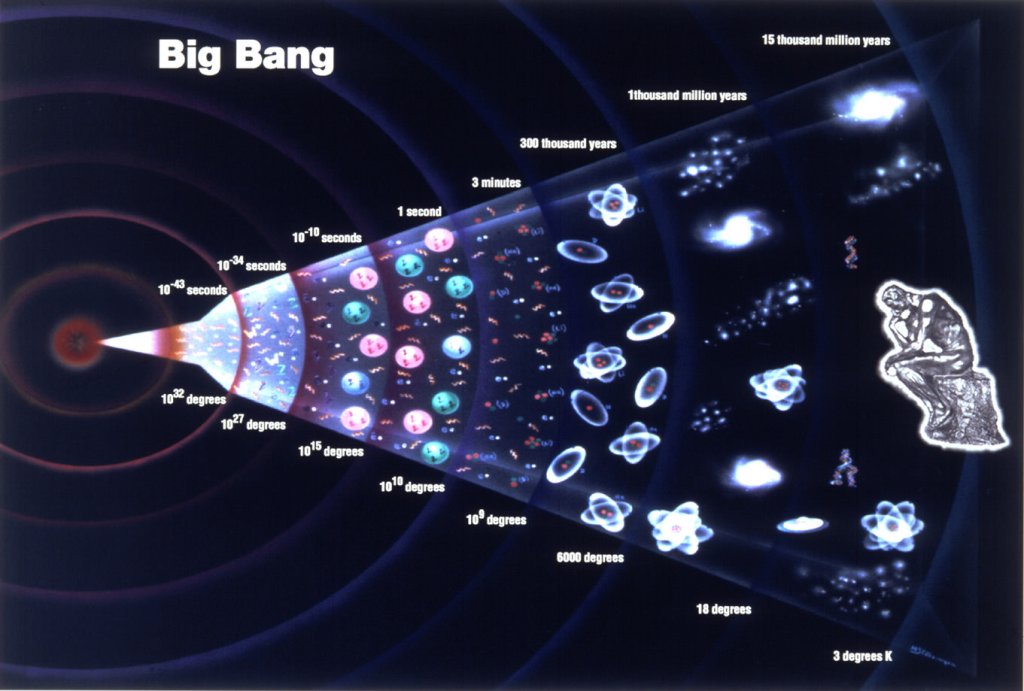
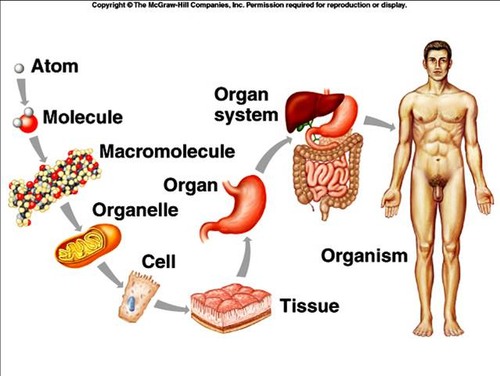
The four slides below capture 300 years of scientific progress in explaining the origin of the Universe, the creation of planet earth, how life emerged from matter, and the evolution of humans from a single-cell organism.
Each chart is a 30,000 feet view of the subject matter, and the knowledge is from one or more disciplines in science. Collectively the ten charts describe the “forest” we belong to. One can drill down from “the forest to the trees to the weeds” of each chart, where all the magic of science is.
These charts answer the questions of what, where, when, and how of all of existence but NOT “the why,” — why things happen?
I turned to philosophy and religion for these answers. The knowledge captured in the ten slides is settled “truth” and not debatable by religious doctrines or philosophical speculations, Except for THREE topics in science.
- What was there before BIG BANG?
- How life emerged from matter.
- What is Consciousness? Science cannot explain what it means to be ME. Where do my thoughts, feelings, emotions, and desires come from?
These questions fall into the domain of religion and philosophy. For anyone, like me, in search of Truth (and nothing but the truth), one has to explore these domains. While science has been the foundation of my belief system, I have delved into religion and philosophy for answers to these important questions. I have found answers at the intersection of science and Vedic philosophy. I have written two books on this topic — Shiva’s Dance: A Scientist Dances with the Sages and The Mind of God of Revealed: Einstein’s Unfinished Business, and am working on the third.




Meditation Is Hard.
An unorthodox approach to meditating.
Don’t let anyone tell you that meditation is easy. “All you have to do is watch your thoughts, and your mind will become quiet,” Jiddu Krishnamurty called it Choiceless Awareness. As hard as I tried, I could not quieten my mind. I was ready to give up on meditation.
Out of desperation, I took to extreme measures to quieten my mind. I started by listening to music while wearing high-fidelity headphones and cranking up the volume. Low-frequency rhythmic sounds would drown out the noise in my head. I mainly listened to drums and chants and would drop into a state of “no mind”; lost in my music. The rhythmic sound of drums and the Gregorian and Buddhist chants would stop the chattering in my mind. The longer the music went, the better I felt.
I was so drawn to this experience that it became my practice for almost a year. Every night I would put my headphones on and repeat the exercise. I became addicted to the experience. My teenage son was in a punk band during this period in my life, and I took to going to his performances and losing myself in his music. I would close my eyes and listen to his loud band. This experience, too, as strange as it sounds, would quieten my mind.
After a year of listening to loud music through headphones and going to concerts with a view to “meditating” in this unorthodox way, I felt motivated to try traditional meditation. After quieting my mind through music, I would stop the music and sit quietly in meditation. I could watch my thoughts float like wisps of clouds in the sky. Often my mind would become still and completely quiet; in these moments, I was lost to the outside world, lost in the void. It felt good.
I meditate often. I drop into meditation in the noisiest of places, such as in crowds or at a party. I became skilled at Choiceless Awareness. I can watch my thoughts. I have flipped from being a scientist to a yogi of the mind. I can now switch quickly and seamlessly between two realities-the external reality and the internal reality. It is almost as if I have a quantum brain or a dual way of being. I can connect with the world of my senses or transcend my senses and enter a different reality.
Nothing Matters
If life is Maya, an illusion, as the Vedas say, or that there is more to reality than meets the eye, as scientists have proven, then what is real?
The Cheshire cat, in Alice in Wonderland, is the wise one, always ready with an answer to Alice’s questions. It appears and disappears at will. Sometimes the cat is gone, and left behind is its smile. Reality might be like the smile on the Cheshire cat. The smile is real, the cat illusory. What we don’t perceive might be more real than what we do.
When I look out of my window, I see trees with branches and leaves. The tree is separated from other trees by empty spaces, the branches are separated from other branches by spaces between them, and the leaves too are separated from other leaves by spaces between them. Without the spaces, the tree would be a big mush. Without space, there would be no objects. When we remove objects, all that is left are spaces in between, like the smile on the Cheshire cat. Does space give rise to objects? Can there be one without the other? Is the nothing of space something?
The new frontier in physics is the “nothingness” of space. Physicists are trying to figure out what it is. Nothing apparently is not no-thing. At first, physicists believed that space was filled with the mysterious substance ether. This idea was experimentally put to rest by Michelson and Morley in 1887[1]. More recently, physicist John Wheeler commenting on Einstein’s theory had this to say about the nothingness of space “Mass tells spacetime how to curve, and spacetime tells mass how to move.” This put nothingness of space on the same footing as matter. “Nothing” mattered from this point on. Space was no longer an inert stage on which matter did its thing. Nothing is active in the cosmic dance, moving and being moved by matter. The nothingness of space is not emptiness but is as much a player (or should I say a dancer) as objects are in Shiva’s cosmic dance.
“Plato, who so vigorously avoided the void…. sounding a little bit like a chemist, seemed to view the background (void) something like a neutral solvent–something that allows other things to come to be without imposing too much of its personality. The background can’t have any personality of itself, otherwise, it would be showing its own face as well.” Wrote K.C. Cole, The Hole in the Universe.
Philosophers such as Plato and today’s scientists agree that the void of space, the nothingness, has no detectable features. So, what is this void? And how do we find out what it is?
“…suffice it to say that very little in the universe is nothing. Almost all the seeming nothings are sums of opposing somethings,” writes K.C. Cole. “What seems like a silent sea of nothing is an infinite number of positives and negatives, all joining together and splitting up in an endless jumble of uncertainty.”
Nothing is not no-thing, but, instead, is teeming with potential some things. It is full of matter and antimatter in equal proportion, canceling each other, which the scientists refer to as conserved quantities or the law of conservation. The things that are conserved are energy, momentum, and charge. The most fundamental things in nature are those that never change. These are changeless and timeless. As is the speed of light, it is a constant, no matter what. It is interesting to think that a photon that travels at the speed of light never ages. The photon that started at Big Bang is still the same photon. It is timeless.
Symmetry is a term used by physicists to describe the void or emptiness of space. It is what accounts for the void or nothingness but has no detectable features. Symmetry is the reason why the void appears as nothing, yet it is full of potential energy and teeming with matter and antimatter. Symmetry is what cancels matter and its opposite, resulting in nothing or the void. Symmetry is an important concept in physics. All the conservation laws are the result of symmetries in nature. Conservation laws are the accountants of nature; they balance the books, that is, they make sure that energy is never created or destroyed, and all the energy that we started at Big Bang is conserved. In other words, when we reassemble all the fragments of nature that happened during the Big Bang, we return to nothing.
Symmetry is the equivalent of Yin and Yang in Zen Buddhism. Yin and Yang’s symbol represents opposites that exist in harmony as one until that harmony is broken, and then they become opposites.
Another analogy for Symmetry is if you were to walk into a glass door thinking there was nothing there, and you shatter the glass into many pieces, you have just broken Symmetry and created something out of nothing.
When symmetry is broken, something emerges. Out of nothing comes something. In the beginning, there was nothing, just the void, which was teeming with potential something. By breaking this symmetry, our universe emerged at Big Bang. This is the creationism story in science.
The creationism story in the Vedas is written in hymn form in the Rig Veda. It too, speaks of how in the void, the opposite existed until “symmetry” was broken, and creation happened.
First, there was the void:
Then there was neither death nor immortality
, nor was there then the torch of night and day.
The One breathed windlessly and self-sustaining.
There was that One then, and there was no other.
In the void existed opposites:
The sages who have searched their hearts with wisdom
know that
which is
kin to that which is not.
Rig Veda, Creation Hymn 1500 BCE —Translated by A. L. Basham
It seems that all of existence is the dance of opposites. When the opposites merge, as in Yin and Yang or in the concept of Symmetry, there is a void. The void is seemingly nothing but in it is the potential for everything.
From the void emerged the “opposites”-matter and anti-matter, spaces and objects, darkness and light. Without opposites, there is no existence. Without darkness, there is no light; without evil, there is no good. We know a thing by its opposite. Reality itself is non-dual[ii]; it is an undivided whole. Because of the limitation of our sense organs, we do not see the oneness behind appearances.
Most of us accept, uncritically, what our senses tell us is reality. We are like fish in a pond; all they know is water. To them, their reality is the pond; they have no reason to suspect that there is anything other than the pond. Most of us are like that, but the few, like the physicists and the ancient sages, who have gone beyond the limitations of their sensory perceptions, have brought us tales of what lies beyond. It is up to us whether we accept what our senses tell us is reality or find out for ourselves what lies beyond the reach of our senses.
“If you look at zero, you see nothing, but look through it, and you will see the world.”[iii] Robert Kaplan.
There is a void in each of us. It is the hole we feel in our being; it is what makes us feel that there is something missing from our life. This void is the source of energy that animates us. As Rumi, perhaps the greatest poet of all time, wrote:
[1] (https://www.aps.org/programs/outreach/history/historicsites/michelson-morley.cfm, n.d.)
[ii] (https://www.youtube.com/watch?v=BZ0YFoUcY0s, n.d.)
[iii] (Kaplan, 1999)
Music, mathematics, and the experience of Reality
“Music has been reported to evoke the full range of human emotion: from sad, nostalgic, and tense to happy, relaxed, calm, and joyous. Correspondingly, neuroimaging studies have shown that music can activate the brain areas typically associated with emotions: the deep brain structures that are part of the limbic system, like the amygdala and the hippocampus, as well as the pathways that transmit dopamine (for pleasure associated with music-listening). The relationship between music listening and the dopaminergic pathway is also behind the “chills” many people report experiencing during music listening. Chills are physiological sensations, like the hairs getting raised on your arm, and the experience of “shivers down your spine” that accompany intense, peak emotional experiences.” (http://syncproject.co/blog/2015/7/21/music-and-emotion, n.d.)
Beethoven, Mozart, Bach, Ravi Shankar, Madonna, Michael Jackson, the Beetles, and other great musicians have created works that transport us to realms of consciousness that mere words cannot. We know from neuroscience that music activates the brain areas associated with feelings, but the feelings that certain music evokes in us have a quality that is otherworldly and transcendental. There is magic in music.
Music that moves us has pattern and structure and movement and timing. “There is geometry in the humming of the strings; there is music in the spacing of the spheres.” — Pythagoras. “Counting, rhythm, scales, intervals, patterns, symbols, harmonies, time signatures, overtones, tone, pitch. The notations of composers and sounds made by musicians are connected to mathematics. The next time you hear or play classical, rock, folk, religious, ceremonial, jazz, opera, pop, or contemporary types of music, think of what mathematics and music have in common and how mathematics is used to create the music you enjoy.”[i]
Both music and mathematics are abstractions they cannot be objectified, yet they impact us in real ways. Their effect on us reveals aspects of ourselves that are non-physical and beyond the reach of our intellect; some call this our spiritual self or our soul. William James, the pioneering psychologist, and philosopher, describes this other aspect of our being thus “Our normal waking consciousness, rational consciousness as we call it, is but one special type of consciousness, whilst all about it, parted from it by the filmiest of screens, there lie potential forms of consciousness entirely different. We may go through life without suspecting their existence but apply the requisite stimulus, and at a touch, they are there in all their completeness, definite types of mentality which probably somewhere have their field of application and adaptation. No account of the universe in its totality can be final, leaving these other forms of consciousness quite disregarded. How to regard them is the question — for they are so discontinuous with ordinary consciousness. Yet they may determine attitudes though they cannot furnish formulas and open a region though they fail to give a map. At any rate, they forbid a premature closing of our accounts with reality.”[ii]
The effect that music has on us might be because music, in William James’ terms, is the “requisite stimulus” that connects us to this other consciousness that is so “discontinuous with ordinary consciousness.”
Lorenzo Candelaria[iii], professor of music history and literature at The University of Texas, writes
“Painting, sculpture, and architecture might spur us toward holiness, but none can unite us quite like music. This is particularly true of singing — an art that invites group participation and can often arise spontaneously around a shared sentiment and a decent tune.”
Music plays a central communal role in every culture. Music is performed in churches, mosques and in temples because it entrains separate minds into producing a singular, powerful experience. A group of individuals becomes one. It becomes a spiritual experience for many.
“Without music, life would be a mistake,” Nietzsche on the Power of Music
Music moves the soul.
[i] (American Mathematical Society, n.d.)
[ii] (Brain Pickings, n.d.)
[iii] (https://www.huffingtonpost.com/author/lorenzo-candelaria, n.d.)
Be Love(d)
Notice how “be love” becomes “be loved” or “beloved” by adding a single letter; it bespeaks the transformative power of love. Love yourself, and you are loved back. Once I understood and accepted myself, I became more accepting of others. I noticed that the more I loved myself (not narcissistically), the more loving I became. I projected love outwards, and it would return to me in kind.
I believe that self-love opens one up and makes room in the heart for others. I know that the hole in our being is filled when we embrace all of life. From an introverted nerd, I turned naturally and without effort into an extrovert. I attribute this transformation to my journey of self-discovery and self-love.
We are interconnected and interdependent. That is, all of life is a web of connections. We are connected to everything and everyone. These connections are invisible but can be felt. We feel the vibrations of others, hence the saying, I feel your vibe. Our emotions create a force field around us. This field attracts or repels others depending on the size of the hole in our being. The closer we are to our authentic selves, the more attractive the force field around us is. It draws others to us. It also affects others’ force fields. Likewise, others’ force fields affect us. I find myself being sucked into another person’s drama. Negative feelings toward others drain me, while positive attitudes of others uplift me.
I have come to believe that, in personal relationships, the invisible field that we create around us has a much greater impact than anything we say or do. We can mislead others by our words and deeds, but our vibrations reveal our true intentions. We cannot fake our vibrations; they are always authentic.
Communion happens when we are fully present to another. In relationships with others, we should be after communion, not communication. What most people want from us is not presents but our presence. When we are transparent within, we let others’ words and sentiments reach us without refracting them from our detritus. But first, we must get rid of the detritus in us, which is the point of self-discovery.
The more we know ourselves, the more transparent we become to others. The more transparent we are, the more open we are. The more open we are, the more life flows through us without resistance. What we resist persists.
Quantum Electro Dynamics, or QED, is the latest theory in quantum physics. It is a theory that elegantly combines Einstein’s theory with quantum mechanics. So, it is of great interest to physicists. But, I find one aspect of QED useful as a metaphor for thinking about life. The essence of QED is that all of nature is made of energetic fields. Low energy fields are forces, and high energy fields are matter. Many fields juxtapose and intersect to create different forms of matter. Each subatomic particle has fields associated with it. In QED, matter does not matter; the interaction of fields matters. The interaction between and among these fields can explain all of their existence. These fields are best visualized as a multidimensional matrix that waves, weaves, and wafts to create our reality. In both QED and Mahayana Buddhism, the interactions between phenomena are the reality, not the phenomena themselves.
I interpret all of this to mean that my physical body, which seems so substantial and real, might be a mental construct and the “real deal” are the interconnections. It is as if we are the spigot through which flow our energies. What affects the world around us is not the “spigot” –of our physical self but the invisible field that flows out of the spigot. The fields are the thoughts and emotions that flow out of us. If love flows out of us, then we create a field of love; if hatred flows out of us, we create hatred in the world.
When we change ourselves, we change our force field, which changes all force fields; that is, we change the world. Hence the saying attributed to Gandhi and Mark Twain, “be the change you want to see in the world.”
When we love ourselves unconditionally, the world loves us back. Loving ourselves unconditionally happens when we are whole inside. When we have fixed our broken parts. Love is a force field that flows from within us and affects others.
Be love. Be loved. Beloved.
My body is flooded
With the flame of Love.
My soul lives in
A furnace of bliss.
Love’s fragrance
Fills my mouth,
And fans through all things
With each outbreath.
The Mind of God
Einstein is known to have said, “I want to know the mind of God.” Nobel laureate Leon Lederman in his book The God Particle, writes about the quest for the single equation in physics that would combine Einstein’s theory of relativity and quantum theory into a single unifying theory. This Theory of Everything is the holy grail of physics. Will we ever know the mind of God?
Let us examine what we already know about the human mind and its relation to the mind of God. We know that all of existence is a creation of our minds. It is as if our mind projects a movie that we mistake for reality. Our senses gather the material from which our mind creates our reality. This material is energy. Imagine, for a moment, that this energy is like jello, and our senses interact with this jello as it jiggles and wiggles, sending signals to the brain; our brain processes these signals and presents them to us as reality. But, this reality, for the most part, is not unique to us. It is a shared reality. The brains of the hundreds of billions of humans who have ever existed have created and recreated the same physical reality for all of humanity. When we see a tree, we all agree that it is a tree, we give it different names and have different associations with it, but we agree that it is a tree; this is true for all that exists. A rose by any other name is still a rose.
So, it seems, our brains are similarly wired for all humans. Every object or form in the universe has a corresponding pattern or representation in the human brain. This pattern is identical in all humans. It is this pattern that we recognize as our universe. We call this the objective universe because it is the same for all of us. The experience of this objective universe is different for each of us and hence subjective. We can all agree on what a rose looks like but usually have different opinions of its fragrance. The rose is objective, but the fragrance is subjective. The objective world has the same representation in each of our brains; it is almost as if there is a universal brain or mind- the mind of God.
According to physicists, all matter, energy, and forces were created fourteen billion years ago in what is known as the Big Bang. Everything that exists in the universe, including us humans, has evolved out of the Big Bang. Humans have a relatively recent history in the universe. Homo sapiens, the first modern humans, evolved from their hominid predecessors about 200,000 to 300,000 years ago. The three scientific theories that are the scaffolding for our understanding of the universe are Darwin’s Theory of Evolution, Einstein’s Theory of Relativity, and Quantum Theory. Darwin’s theory explains how from inert matter life evolved; Einstein’s Theory of Relativity explains space-time, energy, and matter and their interaction on a macro scale; the quantum theory explains the working of matter, energy, and forces at the smallest scale of subatomic particles. No single theory explains the macro world of planets and galaxies and the micro-world of quarks and leptons. Physicists are in search of the Theory of Everything or the mind of God.
Allow me to speculate why western science has been unable to know the mind of God and perhaps will never know it. My thesis is that western science has cleaved the universe into objective and subjective domains. The objective domain is, as previously described, the world that we perceive through our senses, that is, the world outside us; the subjective world is the world inside us. The mind of God does not make this distinction, I believe. There is only one in God’s mind: it is all that exists; there is no separation between the outside and the inside worlds. There can be no theory of everything until there is a theory of everything-the subjective and objective.
Vedic sages did not distinguish between the inside and the outside worlds; they came to a different understanding of Reality than the western scientists. Their view was that an individual could meld their mind with the mind of God; this is a radical view and easy to reject out of hand. Vedic practices of yoga and meditation are how ancient sages accomplished this union with God. In the west, we are only recently discovering the benefits of yoga and meditation; we have yet to realize the inherent potential in these practices.
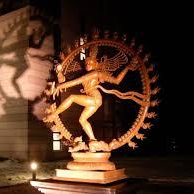
 Shiva's Dance