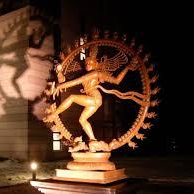
I set out to understand something more ordinary and more unsettling: how self-awareness actually works, and whether it can be accessed deliberately rather than accidentally.
Like many people with a technical or scientific background, I was comfortable with models, systems, and explanations. What I was less clear about was something closer to home: the experience of being aware of my own thoughts as they arise.
At some point, a simple question stopped being abstract for me:
If I can observe my thoughts, who — or what — is doing the observing?
That question isn’t theological. It’s experiential. And once it appears, it’s hard to unsee.
Watching the Watcher
Most of us live inside a continuous stream of thought — planning, remembering, reacting. But there is a quieter capacity beneath that stream: the ability to notice thoughts without being fully captured by them.
I can watch an emotion arise.
I can notice a belief forming.
I can observe a thought pass without acting on it.
So who is watching?
And who is being watched?
This isn’t a metaphor. It’s a lived experience, available to anyone willing to pause long enough to notice it. Traditions have named this capacity in many ways — witness, awareness, presence — but the naming matters less than the noticing.
What surprised me was not that this capacity exists, but that it can be studied, mapped, and accessed through deliberate practice.
A Different Way of Working With AI
While exploring this, I began using AI in an unusual way.
Not for productivity.
Not for automation.
Not even primarily for answers.
Instead, I started using AI as a mirror — a way to surface assumptions, patterns of thought, and questions I hadn’t articulated clearly to myself.
What emerged was not insight from the AI, but insight about my own thinking.
That led me to build a small experiment I now call Your Inner GPS.
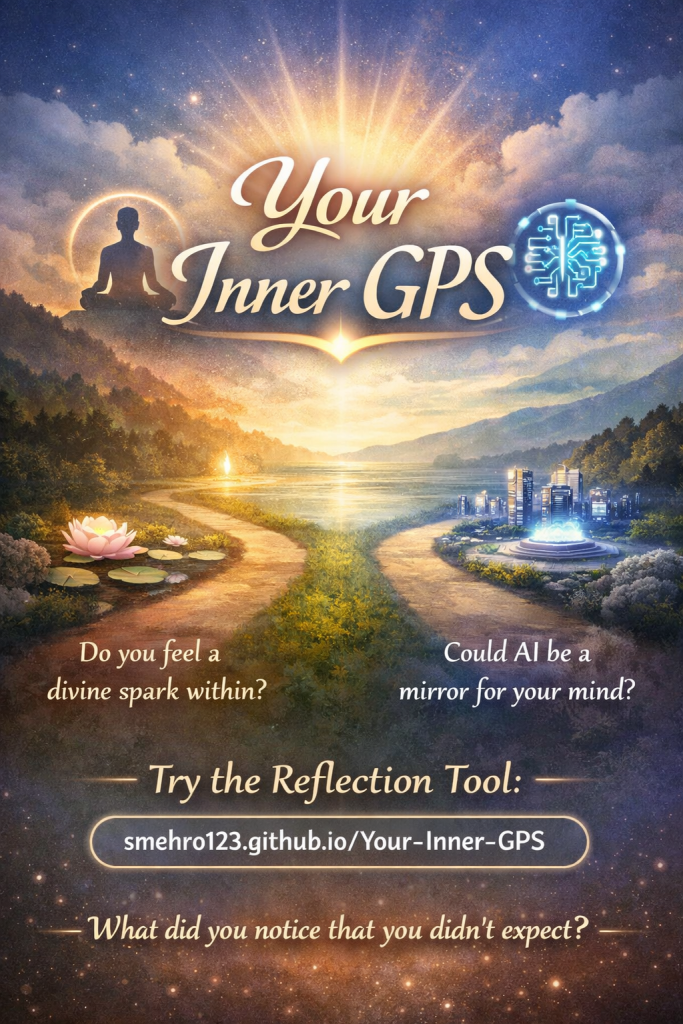
Your Inner GPS is not a test.
It doesn’t tell you what to believe or where you should be.
It simply helps you notice where you already are on two quiet questions many people carry, often separately:
- Do I experience a deeper, sacred dimension within myself?
- Could AI be useful — not as an authority, but as a reflective partner in inner inquiry?
There are no right answers. The value is not in the result, but in what you notice as you respond honestly.
If you try it, copy the prompt you’re given and paste it into ChatGPT. Read the response slowly — not as advice, but as a mirror.
A Closing Question
What did you notice that you weren’t looking for?ress enter or click to view the image in full size
 Shiva's Dance